
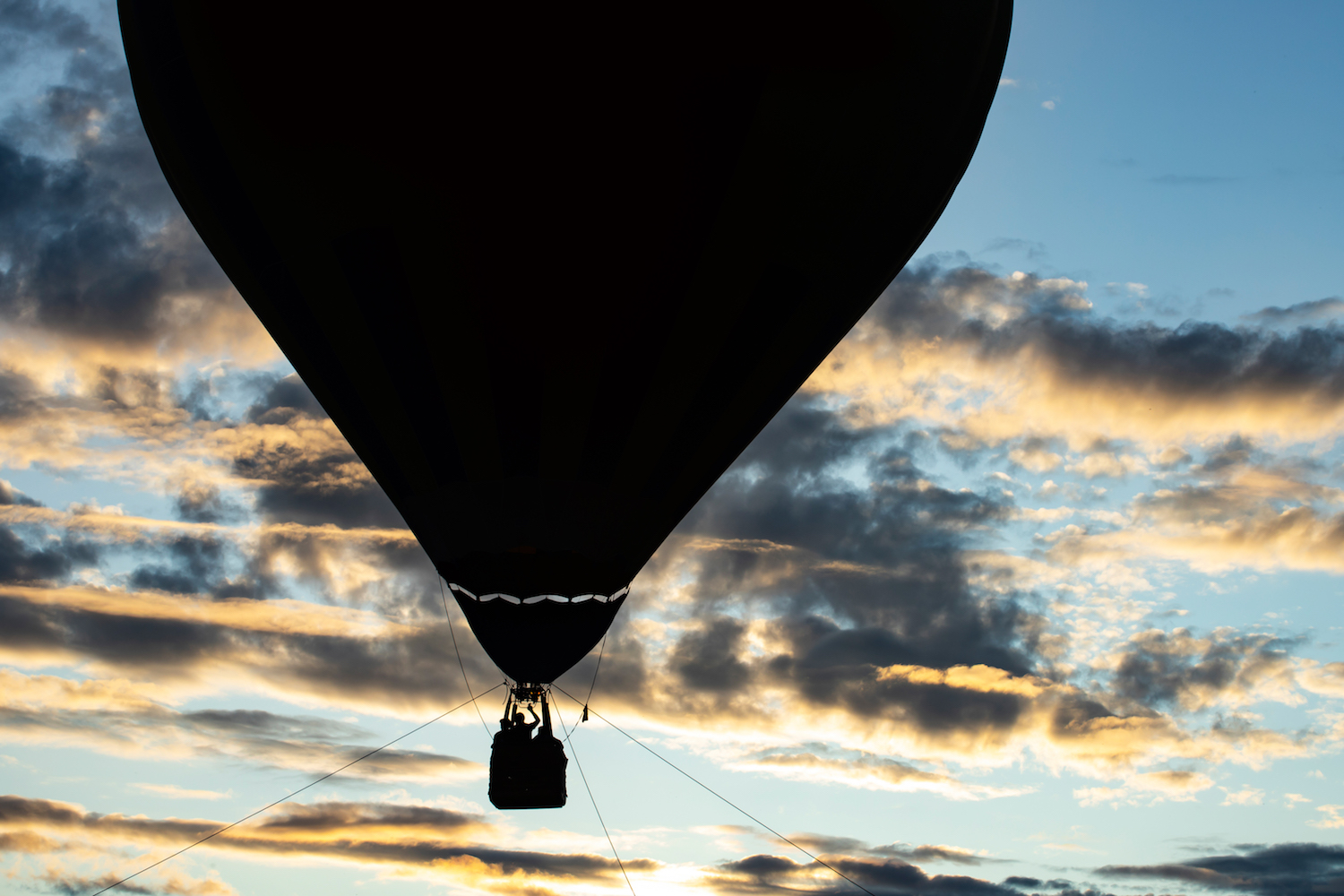
Hot air balloons, with their massive, colorful silhouettes gliding across the sky, are not just an aesthetic sight; they are a perfect demonstration of simple yet effective physics principles. But how does this fascinating journey take place, how are the balloons controlled, and why is this Oman tourist activity, a must-do among things to do in Oman, typically conducted early in the morning?
How Do Balloons Fly and Navigate?
The principle behind a hot air balloon staying airborne is based on Archimedes’ Principle: the hot air inside the balloon is less dense (lighter) than the cooler air outside. This difference in density provides the balloon with a lifting force. Pilots use powerful propane gas-fueled burners to heat the air inside, causing the balloon to ascend.
Navigation, however, relies entirely on the wind. The balloon moves at the same speed and direction as the air mass it is in. The pilot’s role focuses more on vertical maneuvering than horizontal movement. By raising and lowering the balloon, they catch different wind currents at varying altitudes. The phenomenon of different air layers blowing in different directions is the sole hot air balloon strategy that allows the pilot to steer towards their target.
Why Are Hot Air Balloon Flights Done in the Morning?
Balloon flights typically starting at sunrise is critical from a physical and safety standpoint. In the early morning, the air is at its most stable. As the sun rises toward noon, the ground heats up, which creates vertical, turbulent air currents called thermals. These movements in the afternoon make controlling the balloon difficult and pose a safety risk. Calm winds and stable air conditions make it possible to control the balloon much more precisely and safely, especially during landing.
Sunrise by Hot Air Balloon Over the Omani Deserts
One of the most exotic destinations that comes to mind when discussing the hot air balloon Oman experience is Oman. Balloon tours, especially those conducted over the desert regions like the Sharqiya Sands (also known as Al Wahiba Sands), offer an unforgettable voyage over sand dunes that turn gold with the first rays of morning light, rising mountain silhouettes, and valleys. Thanks to its unique scenery and calm climate, this balloon ride should be at the top of your Oman tourist activity list. An average tourist flight lasts about one hour at an altitude of 300 to 900 meters.
This activity in Oman offers a direct opportunity to experience the laws of nature firsthand in the sky, making it an essential part of any Muscat Oman tourism or Oman tourist guide itinerary.